Skip to content

New Study Reveals Acupuncture Benefits For Women In Menopause

menopause-acupuncture-01

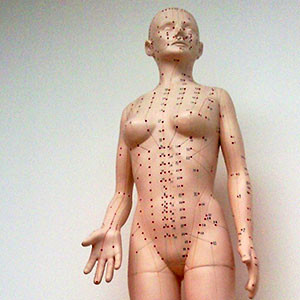
Natural menopause – the absence of menstruation for longer than 12 months – often comes with a wide range of unpleasant symptoms, such as insomnia, anxiety, irritability, night sweats, and of course hot flashes. However, a recent study found acupuncture to reduce or even eliminate some of these systems, improving quality life and reducing stress/anxiety in women going through menopause.

Researchers at Taipei Medical University in Taiwan monitored 869 participants who are were going through menopause while using 12 different treatment methods. One of the 12 treatment methods was acupuncture, which surprisingly proved to be the most effective at relieving the discomfort associated with menopause.  continue reading »

Posted in Acupuncture | Tagged , | Comments Off on New Study Reveals Acupuncture Benefits For Women In Menopause

3 Ways To Improve Your Posture

poor-posture-01-smDo you suffer from poor posture? Whether you’re sitting down at a desk, standing, walking or running, you should focus on maintaining your body’s natural position. This means keeping your head and neck up while avoiding slouching or slumping. The good news is that you can reverse the effects of poor posture by following some simple steps.

Some of the physiological problems linked to poor posture include: continue reading »

Posted in Wellness | Tagged , , | Comments Off on 3 Ways To Improve Your Posture

7 Superfoods That Can Change Your Life

blueberries_superfoodsYou are what you eat is an adage that holds more truth than you may realize. Unfortunately, many people today focus their diet around processed foods that are high in sugar, sodium and fat. Diets such as this can increase a person’s risk of developing diabetes, heart disease, obesity, and more. You can protect your body and health against such illnesses, however, by eating lean meats, fresh vegetables, and by adding the following “superfoods” to your diet.

#1) Broccoli

This edible stalky plant of the cabbage family is loaded in potassium, vitamin B-6, vitamin C magnesium, and calcium. Scientists believes broccoli’s phytochemicals – organic chemical compounds which occur naturally – are able to aid in skin health, regulate blood sugar levels, strengthen the immune system, and ward off joint inflammation. continue reading »

Posted in Nutrition, Wellness | Tagged , | Comments Off on 7 Superfoods That Can Change Your Life

7 Things You Should Know About Acupuncture and Pregnancy

pregnancy-071414Acupuncture involves the placement of thin sterilized needles to stimulate various acupoints throughout the body. The stimulation of these areas is believed to correct imbalances and blockages in the body by promoting the healthy flow of energy (known as qi – pronounced CHEE).

The thought of having half a dozen or more tiny needles sticking into your skin when you’re pregnant, might sound frightening. However, it’s actually a safe, painless, straightforward procedure that can treat a number of adverse symptoms associated with pregnancy. continue reading »

Posted in Acupuncture, Wellness | Tagged , , | Comments Off on 7 Things You Should Know About Acupuncture and Pregnancy

Ch’an Lineage Discipleship – Part 2

Ch’an Lineage Discipleship Part 2 – The Er Mei Lineage and Master Fu, Wei Zhong.

With what sort of man of the Tao should one associate, so that one will hear constantly what one has never heard? – Ts’ao-Shan Pen-Chi

This is the story the way I understand it.  Er Mei (or E Mei) was founded by a Taoist monk named White Cloud who adopted Buddhism during the Southern Song Dynasty (1127-1279). The mountain and monastery became one of the four main sacred mountains of Buddhism in China. The following quote is from  http://sacredsites.com/asia/china/sacred_mountains.html

In the 1st century AD, merchants returning from India via the Silk Route began the introduction of Buddhism into China. Over the next few centuries adventurous Chinese pilgrims traveled to India to visit the sacred places of the Buddha’s life. Like Taoist hermits, the Buddhists monks favored quiet mountains and deep forests for their meditative practices. Small hermitages and later great monastic complexes sprung up at many peaks (some previously held sacred by the Taoists) and over the centuries the Buddhists began to regard four peaks as having primary sanctity:

  • Pu Tuo Shan, Buddhist mountain of the east, Zhejiang province, 284 meters. Sacred to Kuan-Yin, the Bodhisattva of Compassion.
  • Wu Tai Shan, Buddhist mountain of the north, Shanxi province, 3061 meters. Sacred to Manjushri, the Bodhisattva of Wisdom.
  • Emei Shan, Buddhist mountain of the west, Sichuan province, 3099 meters. Sacred to Samantabhadra, the Bodhisattva of Benevolent Action.
  • Jiu Hua Shan, Buddhist mountain of the south, Anhui province, 1341 meters. Sacred to Kshitigarbha, the Bodhisattva of Salvation.

Each of the Buddhist sacred mountains is considered to be the dwelling place of a Bodhisattva. These particular Bodhisattvas are mythological spiritual beings that have dedicated themselves to the service of assisting all sentient creatures in the transcendence of worldly suffering and the attainment of enlightenment. These Buddhist mountains and the Taoist peaks listed above became the primary pilgrimage destinations of both China’s masses and also the ruling elite. Over many centuries the monastic centers developed into great centers of scholarship, art and philosophy, with hundreds of temples and thousands of monks and nuns. This extraordinary way of life continued unbroken until the Communist Revolution of 1949. Readers interested in more in-depth study of sacred sites and pilgrimage in China are recommended to consult the works of Naquin and Yu (and their extensive bibliography), Birnbaum, and Geil.

Ok – so much for the scholarly part. Please remember the following is my understanding and there may be errors in it. One of the unique things about Er Mei is that they have alternating Monastic and Layman lineage holders. One generation the lineage holder engages entirely in monastic practices, the next generation the lineage holder gets trained at the monastery and then goes out into the world to teach; and then brings information back to the temple to train the next generation.

Er Mei lies to the West in China, not far – at least in relation to other parts of the country – to Tibet. The integration of complete Taoist and Buddhist lineages with indigenous Tibetan and Chinese Shamanic practices made Er Mei unique among the Chinese lineages. According to a holder of another lineage, and this may be coming from some many generations old grudge, or “my school’s better than your school” attitude, or who knows what  – Er Mei was known for being a bit “out there” – mystical and superstitious, possibly involved with sorcery. This kind of thing is easy to assert and difficult to disprove once the suspicion has been raised, regardless of the possibility or reality of the charge.  

Grandmaster Fu, Wei Zhong,(AKA Weizhong Fu or Master Fu) is the 13th layman lineage holder of the Er Mei Lin Ji Sudden Enlightenment School of Ch’an Buddhism. He was another of the fully vetted teachers of verifiable Buddhist lineage I had the fortunate karma to meet while in Florida. My experiences with him, as might be expected, were to be very different from those I would have with the Vajrayana Lineage Khenpo Brothers……

link – www.emeiqigong.us/lineage/lineage/fu-wei-zhong.html

To Be Continued: Next Installment  – Part three – Meeting Grandmaster Fu, Wei Zhong.

Posted in Uncategorized | Comments Off on Ch’an Lineage Discipleship – Part 2
5757378727